
Why Marketing Data Lies to You?
Today, most businesses have access to a lot of marketing data. Platforms like Google Analytics, LinkedIn Ads, and Meta Ads show traffic, engagement, and conversions.
The problem is not the lack of data. The problem is that the data is often read the wrong way.
A campaign may show strong engagement but bring in very few real customers. Website traffic may increase, but the visitors might not actually be interested in buying.
Platforms can also take credit for results they only partially influenced. Because of this, marketing reports can make things look successful even when they are not.
When businesses rely on these numbers without questioning them, the data starts pushing decisions in the wrong direction.
Common Mistakes That Make Marketing Data Misleading
A lot of misleading marketing data comes from small mistakes that happen every day.
- Attribution confusion: Many businesses assume the last click caused the sale. In reality, customers often interact with several touchpoints before making a decision.
- Platform bias: Advertising platforms tend to credit themselves for results, even if other channels helped drive the decision.
- Direct traffic misunderstanding: “Direct” traffic often includes untracked links from emails, messages, or shared content. It is frequently mistaken for strong brand demand.
- Engagement being mistaken for intent: Likes, views, and watch time can look impressive, but they don’t always mean someone is ready to buy.
Conversion reports showing only the final result. Analytics tools show who converted, but they rarely show who almost converted and why they didn’t.
Each of these issues seems small on its own, but together they create a distorted picture of marketing performance.
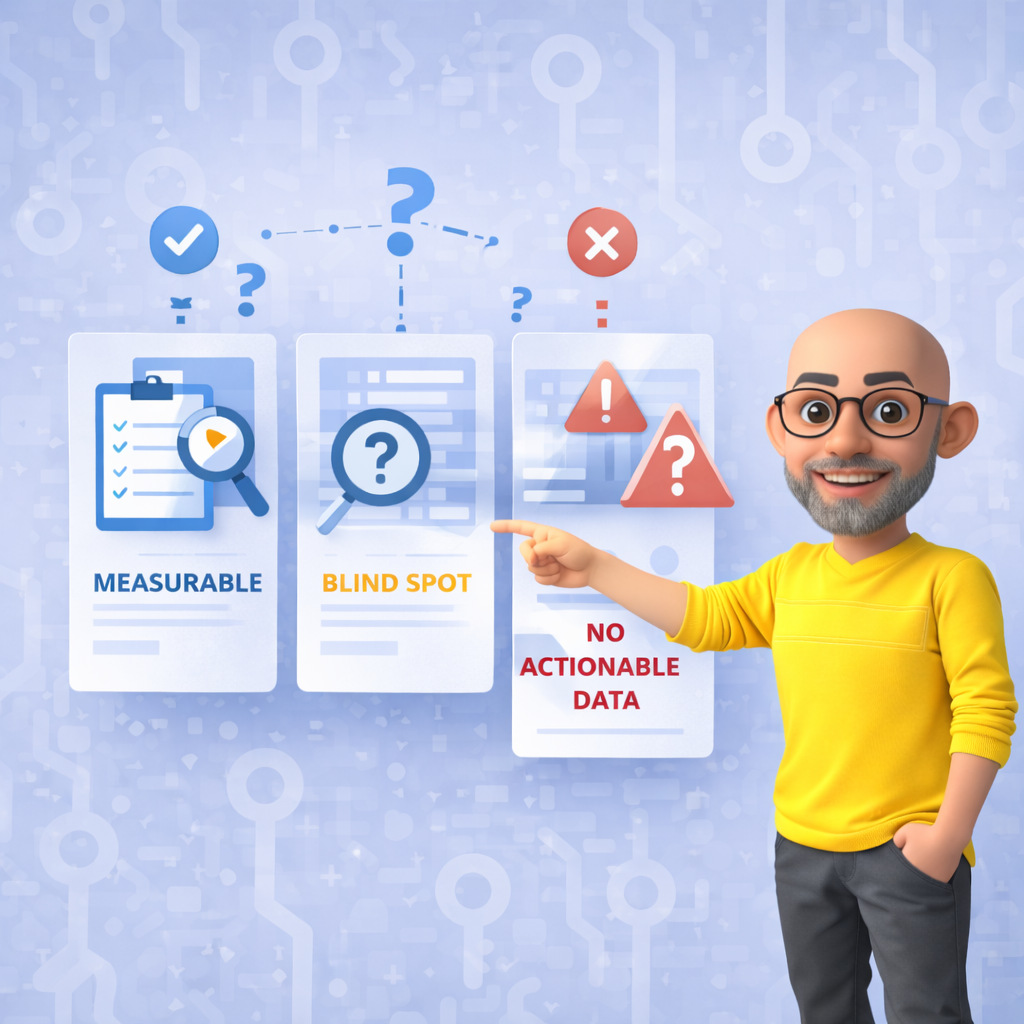

The Real Cost of Misleading Marketing Data
When businesses rely on misleading data, the consequences can be significant.
- Budgets get increased in the wrong channels.
- Marketing teams optimize campaigns that are not actually driving results.
- Important problems in the sales funnel remain hidden.
Over time, companies can spend months or even years improving the wrong things. The most frustrating part is that the numbers may continue to look positive while real growth slows down.
This is why many organizations feel like they are working harder on marketing but not seeing the results they expected.
Creating More Clarity in Your Marketing Data
The solution is not simply collecting more data.
What matters is understanding which signals can actually be trusted.
Clear marketing data usually comes from:
- Consistent tracking across channels.
- Proper attribution models.
- Understanding the difference between engagement and intent.
- Looking at the full customer journey instead of isolated metrics.
- Evaluating how different platforms influence each other.
When these pieces are examined together, the picture becomes much clearer. Instead of reacting to every number that moves, businesses can make decisions based on reliable signals.

A Digital Marketing Research (DMR) audit focuses on understanding whether your marketing data is giving you the right signals.
The audit reviews areas such as:
How your marketing data is being tracked?
Whether attribution is accurate.
Where misleading signals may exist?
How different channels are influencing results?
Where decisions may be based on incomplete data?
“The goal is simple – To help businesses understand what their marketing data is actually telling them, and where adjustments may be needed.”
Once the data becomes clearer, it becomes much easier to make confident decisions about marketing strategy.
Request a Digital Marketing Audit Call
That’s a common situation, Most businesses have access to plenty of data, but not always the clarity they need to make confident decisions.
Taking the time to step back and examine how your marketing data works can often reveal things that dashboards alone cannot show.
If you would like a clearer view of what your marketing data is actually telling you, the Digital Marketing Research team can help review your current setup and identify where improvements can be made.