
Digital Marketing to Increase Sales
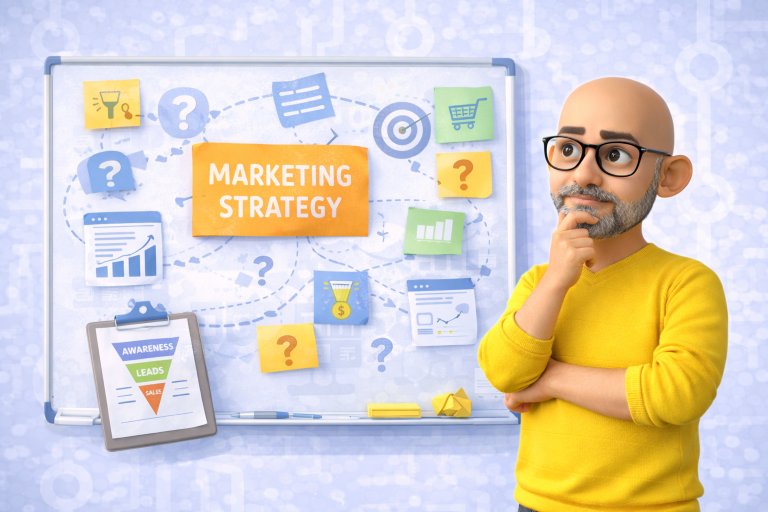
If you want your digital marketing to increase sales for your business, a digital marketing strategy is how you get there.
The Strategy?
You might be wondering what that actually means?
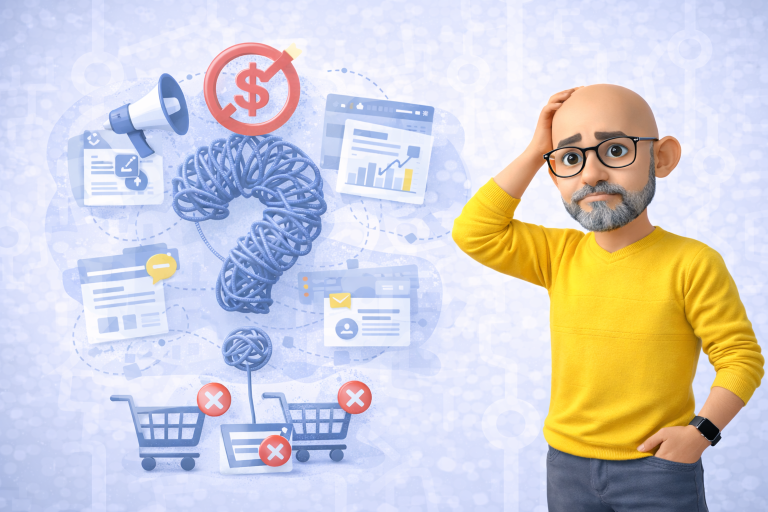
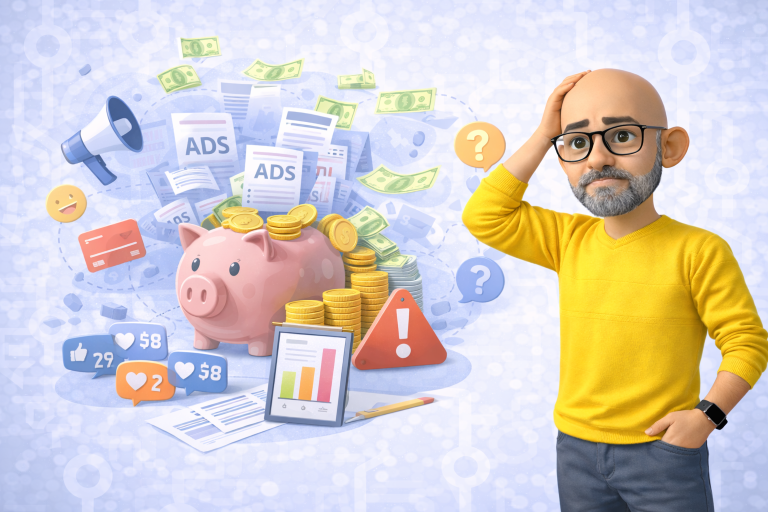
To better understand that, let’s explore what happens when there isn’t a strategy in place:
There is no clear path from customer awareness to purchase
Content is posted across channels but cannot tell if it is driving revenue
Money is spent on marketing without getting more sales
Traffic is coming in, but conversions are inconsistent or unexplained
These issues are not isolated. They overlap into each other, making your marketing expensive, and often unsuccessful.
How Digital Marketing Can Increase Sales
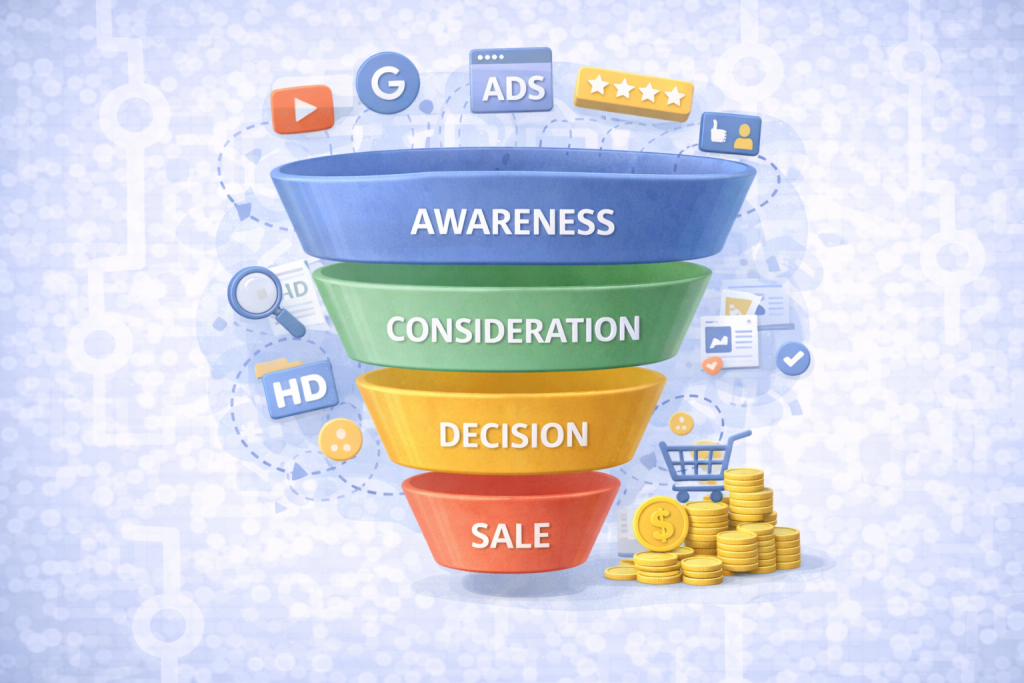
To increase sales consistently, your marketing must guide buyers through a defined strategic funnel:
What a Strategic Funnel Is:
A strategic funnel is the structured path your customer takes from first awareness to final purchase.
It defines:
- How people first discover your business
- What moves them from interest to consideration
- What convinces them to take action
- What removes hesitation before they buy
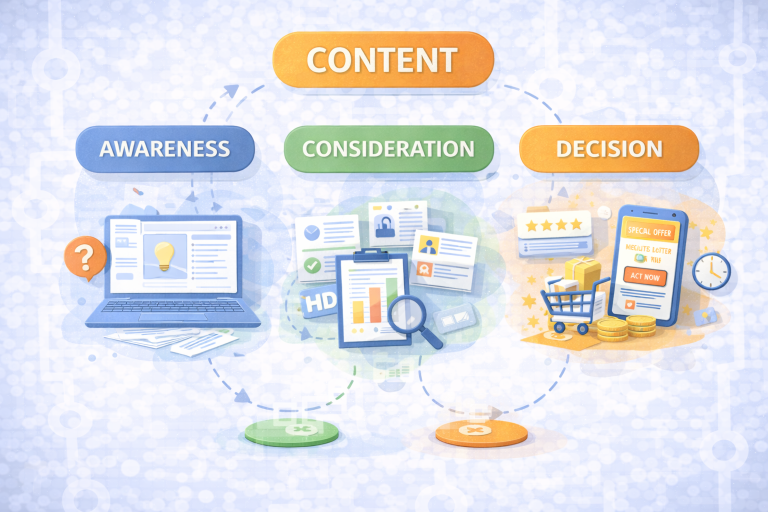
To increase sales, the funnel must move customers through three distinct stages:
- Awareness.
- Consideration.
- Conversion.
Each stage has a specific purpose, specific tools, and a specific role in revenue generation.
This is the foundation of how digital marketing increases sales.
We will walk you through each step below in order to perfect your digital marketing strategy.
Step 1: Awareness
The awareness stage is where potential customers first discover your business.
At this stage, the objective is visibility, not immediate sales.
Awareness can be generated through:
SEO content that ranks in search engines
Micro-content such as short-form social posts
Paid advertising targeting defined audiences
SEO allows customers to discover your business when they are actively searching for solutions. In this case, search intent drives the first interaction.
Micro-content builds visibility in social environments. It introduces your brand and communicates value in short, accessible formats.
Paid ads accelerate awareness by placing your message directly in front of a targeted audience.
However, awareness alone does not increase sales. It creates attention.
What determines revenue is where that attention is directed next.
Without a defined next step in your funnel, traffic leaves without action.
Step 2: Consideration
The consideration stage is where general consumer interest becomes more intentional with your audience.
This is where landing pages play a central role.
What a landing page is supposed to do:
A landing page is not a general website page. It is a focused page built around one specific action, such as:
Capturing an email address
Submitting a form
Downloading a resource
Purchasing a product
Where the landing page sits depends on how the visitor arrives:
If traffic comes from SEO, the landing page may be the first interaction. In this case, it supports both Awareness and Consideration.
If traffic comes from social content, awareness happens first. The landing page then deepens interest.
If traffic comes from paid ads, the ad creates awareness and the landing page becomes the immediate consideration step.
In every case, the purpose of the landing page is the same: Guide the visitor toward one measurable action.
If landing pages CTAs are not clear, interest does not progress and you might lose the potential sale.

Step 3: Conversion
The conversion stage is where a potential customer completes the action your funnel was designed to generate.
This action may include:
- Submitting a lead form
Completing a purchase
Registering for a service
Confirming a consultation
Conversions require a structured system that reinforces the consumers decision to proceed with your CTA.
Here's how it works:
1. Clear Calls to Action
Every page must make the next step obvious. If the action is unclear or diluted by multiple options, completion rates decline.
2. Email Follow-Up
Not every visitor converts immediately. Email sequences allow continued communication with prospects who expressed interest but did not complete the action. This supports delayed decision-making without restarting the funnel.
3. Retargeting Through Paid Ads
Visitors who clicked an ad or visited a landing page but did not convert can be re-engaged through retargeting campaigns. This maintains continuity and reinforces the original offer.
4. Reduced Friction in Booking or Checkout
Complicated forms, unclear pricing, or unnecessary steps interrupt conversion. The fewer obstacles between intent and action, the higher the completion rate.
Ready to Drive Sales with your Digital Marketing?
This blog was a starting point, a simple way to structure your digital marketing so it can actually impact sales.
But structure alone isn’t enough.
Until you can clearly see:
What is working
What is wasting time or budget
What should be fixed first
Any changes you make are guesses.
Guesses don’t create increase sales.
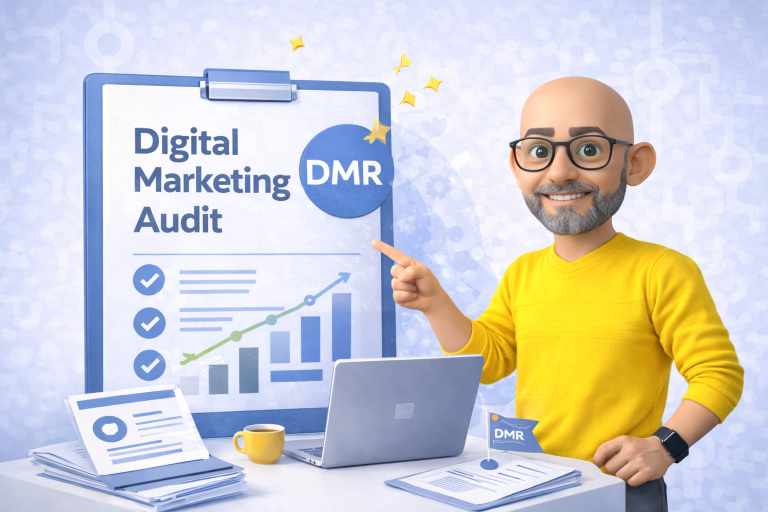
A Digital Marketing Strategy call from DMR is designed to give you that clarity. It shows you what needs to change, what should stay, and where to focus so your marketing can start driving sales intentionally.
If you’re ready to understand what’s actually holding your marketing back, the next step is a conversation.